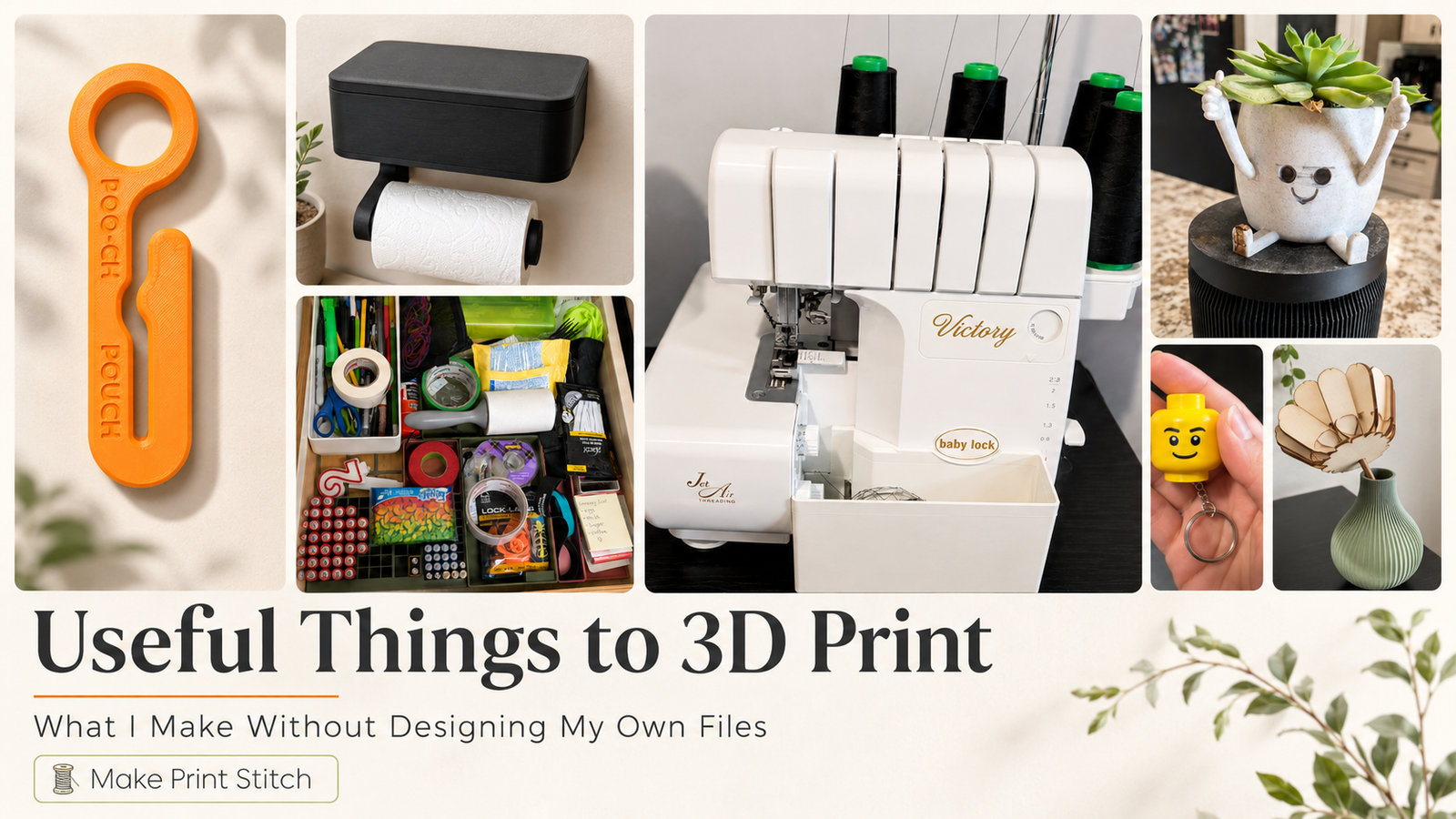
I own a 3D printer.
Actually, I own more than one.
f you’re wondering “is a 3D printer useful?”, the answer for me has been yes — mostly because I use it for far more everyday things than I expected.
Can I design my own STL files?
Nope.
Has that stopped me from printing organizers, plant pots, gifts, keychains, sewing accessories, household fixes and an unreasonable number of baskets?
Also nope.
And that is probably the biggest thing I wish more beginners understood about 3D printing:
You do not need to know how to design 3D models to get a ridiculous amount of use out of a 3D printer.
Most days, my process is less engineering genius and more:
There has to be a file for this.
And usually, there is.
There are thousands of ready-to-print models available online, and for the way I use my printers, that is more than enough. I often start with Bambu Lab’s MakerWorld to see if someone has already made what I need, but the bigger point is that I think of my 3D printer the same way I think about my laser, sewing machines or vinyl cutters: it is another tool I can reach for when I want to solve a problem, organize something, make a gift or create something just because I think it would be fun.
So if you’re wondering whether you would actually use a 3D printer — especially if you have zero interest in learning CAD — here is what using one looks like in my house.
And if the idea of designing your own files is the part that feels intimidating, I went deeper into that in I Still Don’t Know CAD — and I’m Making Custom 3D Prints Anyway, including how I use Bambu Lab MakerWorld and MakerLab to find and customize projects.
It Solves Weirdly Specific Everyday Problems
This might be the category that best explains why I find a 3D printer useful.
You encounter a small annoyance, search for a solution, and discover that someone else somewhere has already designed exactly what you need.
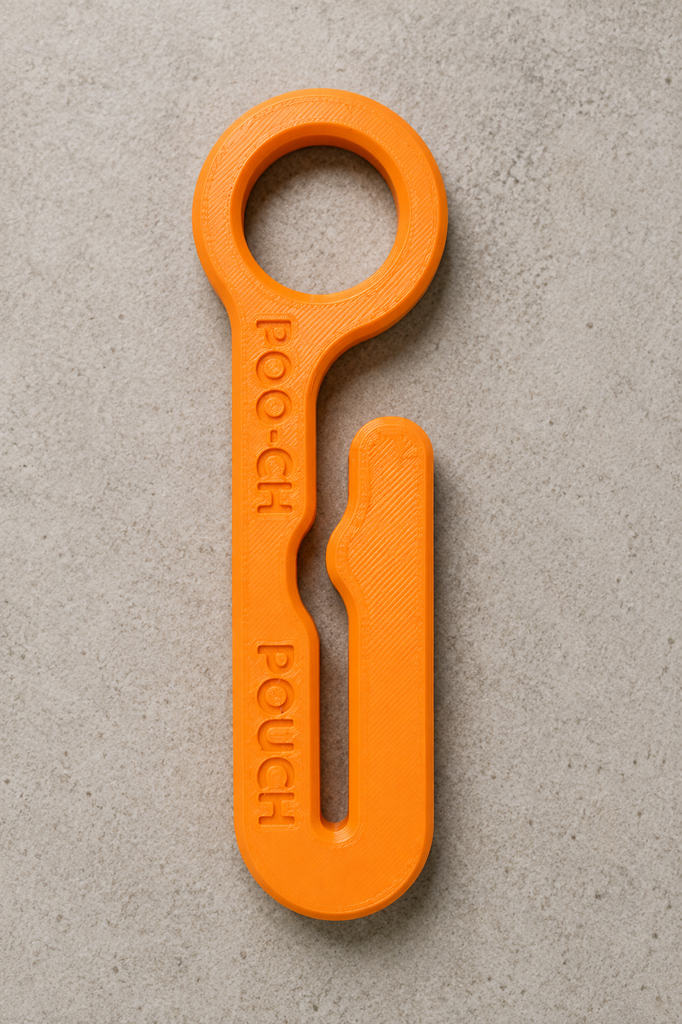
One of my favourite examples is a small dog waste bag holder that clips onto the leash. Instead of carrying a tied bag around until you eventually find a garbage can, it hangs from the holder.
Very glamorous use of advanced manufacturing technology.
Also extremely useful.
I’ve also printed much less exciting — but equally practical — things like a toilet paper holder and soap dish.
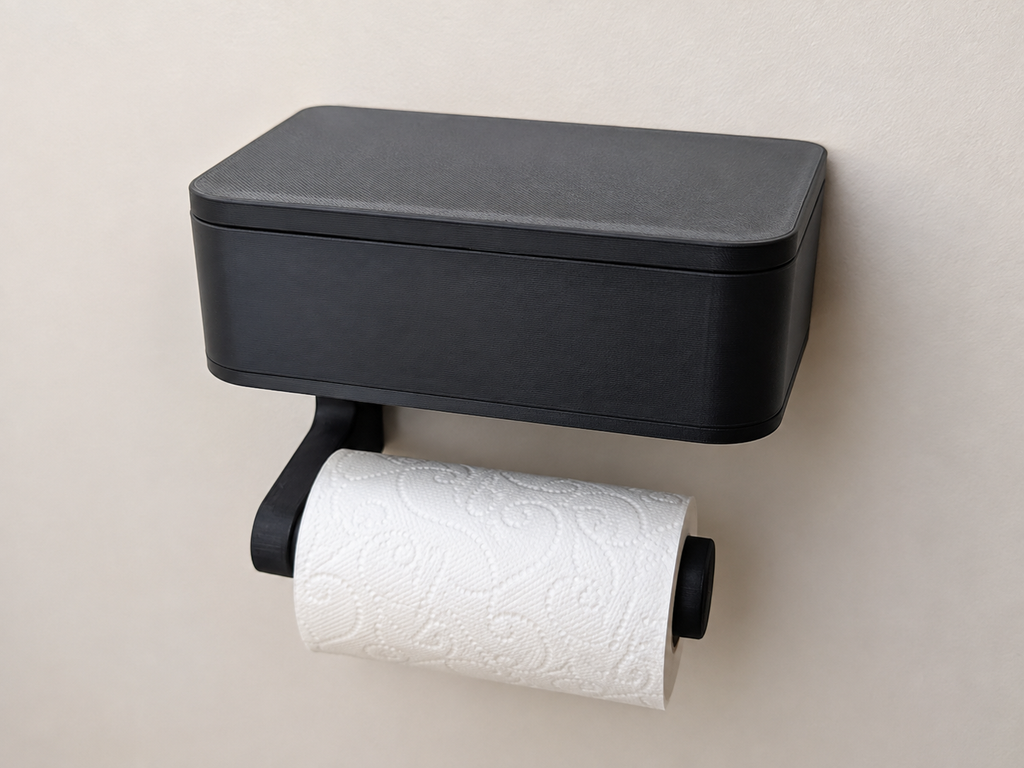
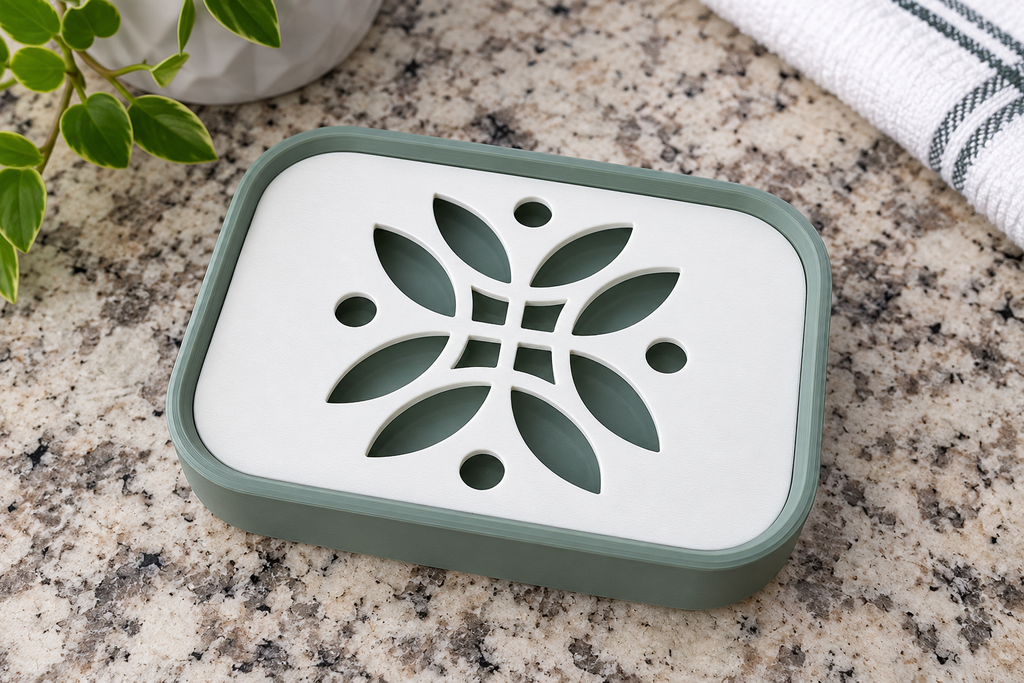
That’s part of the value for me. Instead of always asking, Where can I buy something for this? I sometimes catch myself asking:
Can I print one?
If You’re Already a Crafter, It Gets Even More Useful
If you’re an intense crafter like me, you eventually reach the point where you need organizers for the supplies you bought to make other things.
Then, naturally, you acquire a machine capable of making more organizers.
Completely reasonable behaviour.
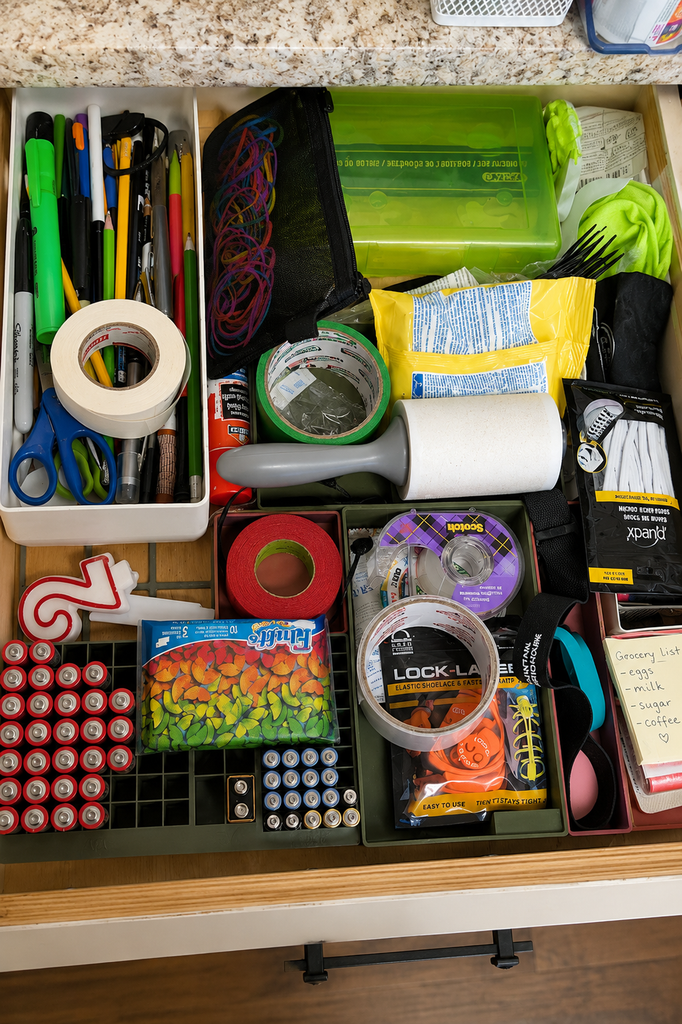
I’ve printed tons of trays, baskets and small storage containers for my craft space.
Does this mean my craft room is now perfectly organized?
Absolutely not.
Let’s keep our expectations reasonable.
But being able to print a container in roughly the size I need is incredibly handy — especially when the room contains sewing supplies, vinyl tools, laser supplies, hardware, adhesives and approximately 700 tiny things that cannot be thrown away because I might need them someday.
I also use an IKEA SKÅDIS pegboard and have printed several accessories for it, including thread holders.
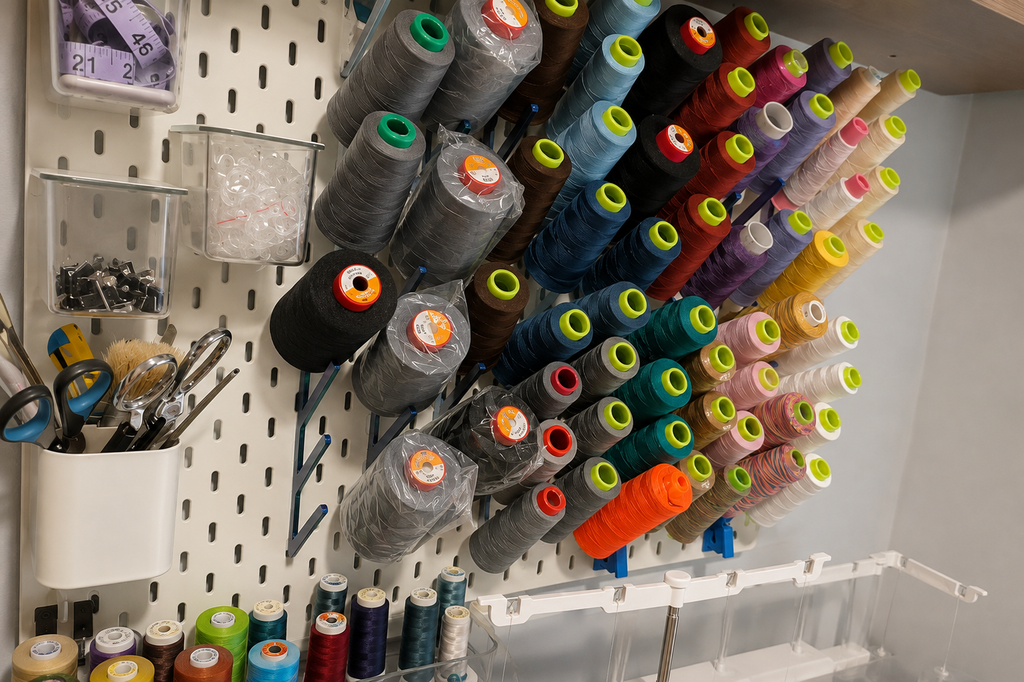
Because SKÅDIS is so widely used, there are already tons of files available for hooks, holders, bins and specialty accessories.
I didn’t need to measure the pegboard or design the attachments myself.
Someone else already did that part.
I just printed them.
One Machine Can Help Another Hobby
This is probably where 3D printing becomes most useful to me.
I don’t really think of sewing, laser engraving, vinyl cutting and 3D printing as completely separate hobbies.
They’re all tools.
And sometimes one tool makes something that helps another tool.
My Baby Lock serger, for example, trims the edge of the fabric as I sew, which means it produces a steady supply of little fabric scraps.
I found a file for a mini waste bin designed specifically to fit my serger.
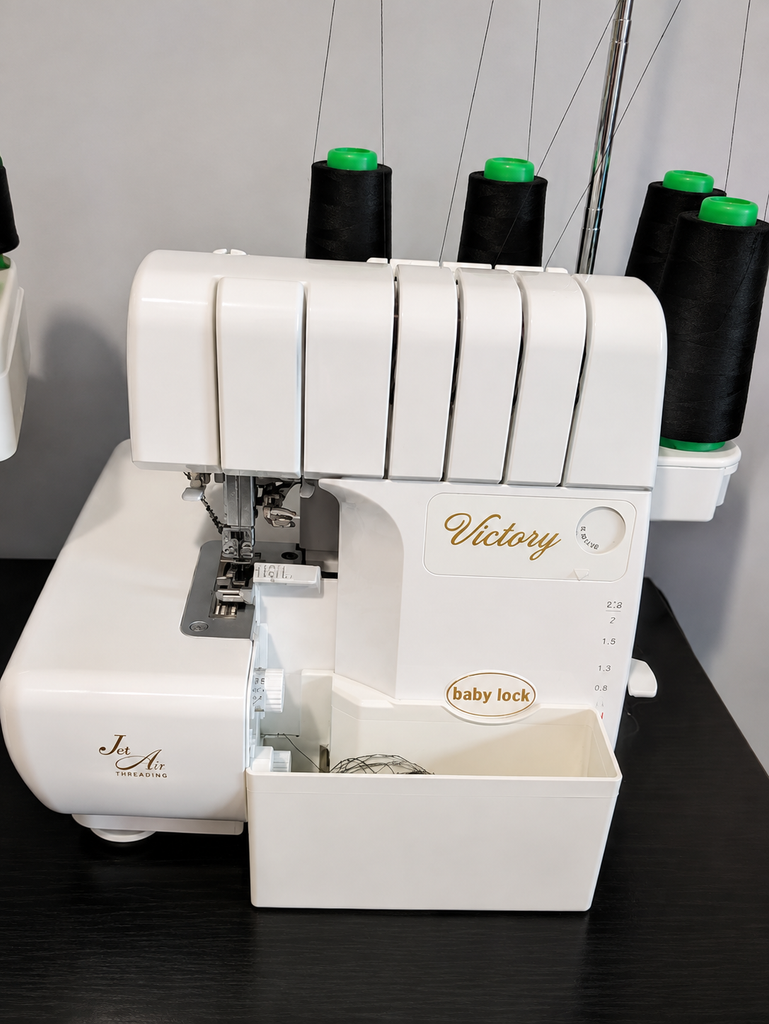
I didn’t measure the machine.
I didn’t design the bin.
I didn’t learn CAD.
I searched for my model, found the file and printed it.
That’s my preferred level of engineering.
I’ve also printed a stand for my xTool F1, and eventually I’d like to experiment with printing custom laser jigs.
This crossover between machines is something I want to explore much more on Make Print Stitch.
It Makes Gifts, Decor and Things I Definitely Didn’t Need
Not every print has to solve a household problem.
Sometimes you print something because it’s cool.
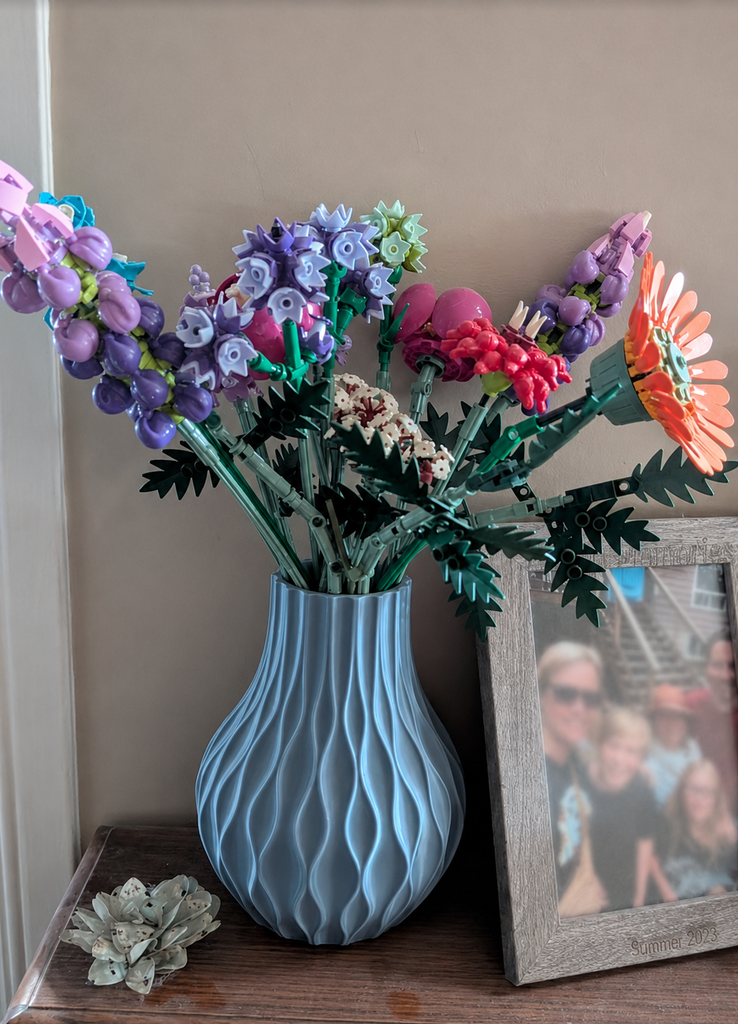
I’ve printed quite a few bowls, baskets, planters and vases. I love the textures you can get from 3D printing, and changing the look can be as easy as switching filament colours.
I’ve also printed articulated creatures, character planters, fidget keychains, picture frames and gift card holders.
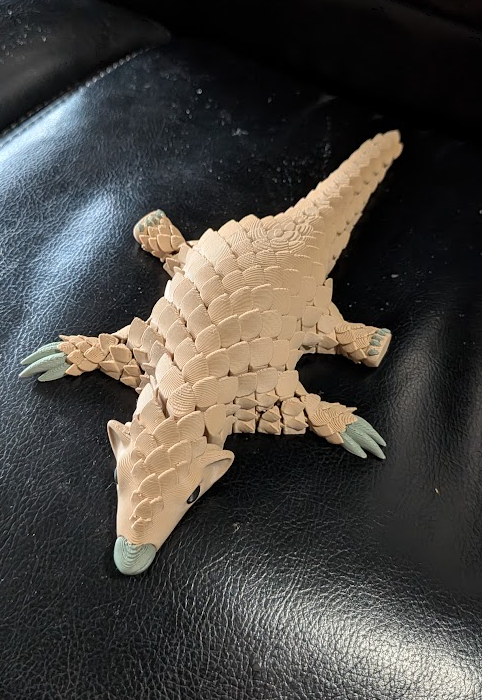
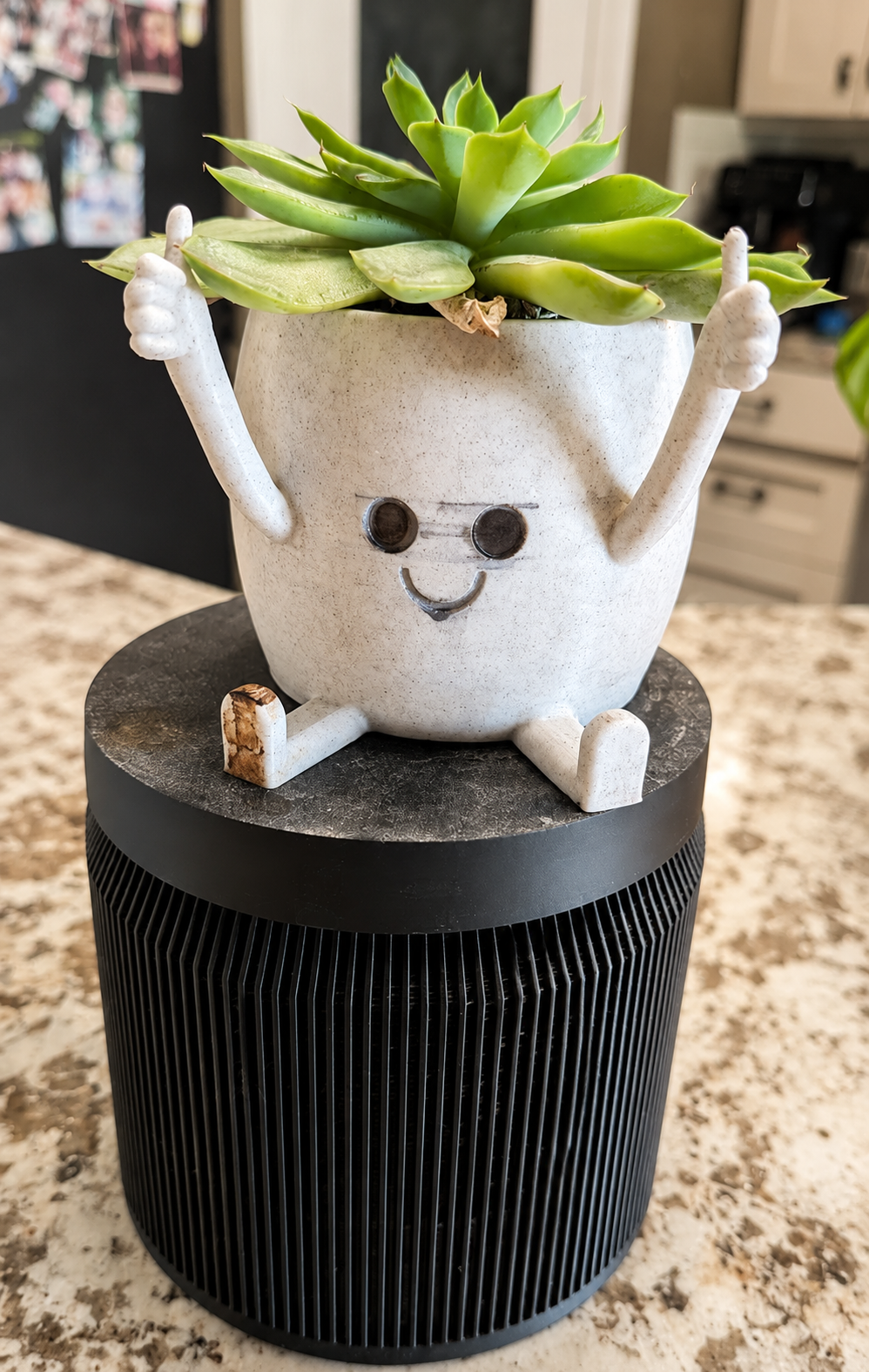
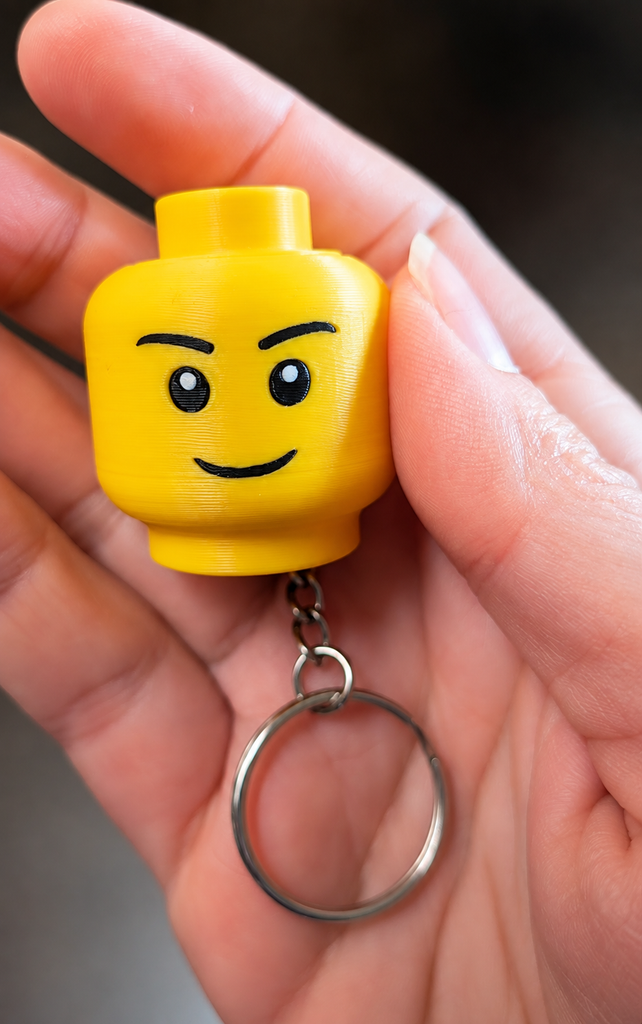
Are all of these necessary?
No.
That is not always the point.
One of my favourites is a maze piggy bank with a lid you have to solve before you can get the money out.
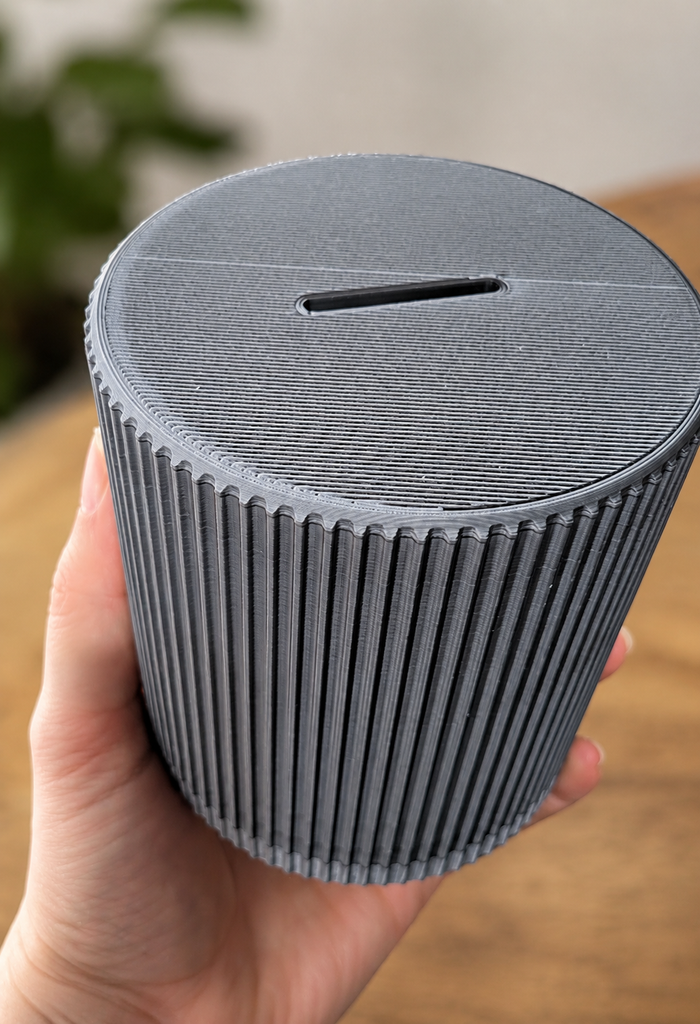
It’s essentially a piggy bank secured by mild inconvenience.
Brilliant.
And I didn’t design that either. I found the model and printed it.
This Is Where the Machines Start Working Together
One of the things I’m most interested in is combining different types of making.
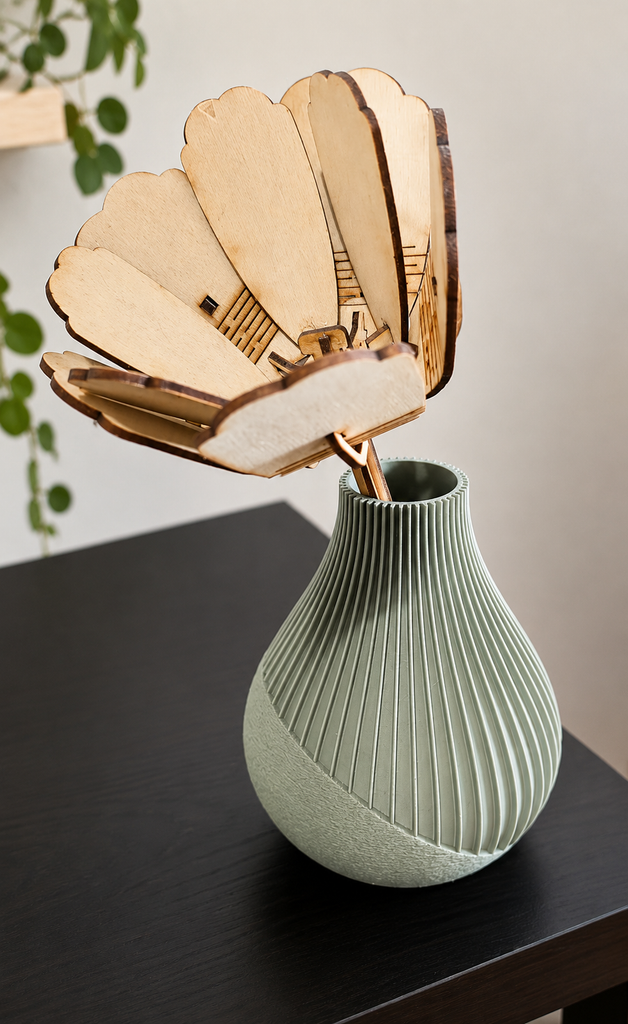
This little vase is 3D printed, while the flower is laser cut.
Neither is particularly complicated on its own, but together they become something more interesting.
I’ve also started experimenting with adding UV-printed designs to 3D printed objects, and I suspect there will be a lot more projects like this around here.
Why choose one machine when several machines can participate?
Do You Need to Know How to Design Your Own 3D Models?
No.
At least not for the way I currently use my printers.
Could I learn CAD eventually?
Probably.
Will there be situations where I’d like to design something completely custom?
Almost certainly.
But I don’t think learning 3D modelling should be treated as the entrance exam for owning a 3D printer.
There are already huge libraries of models available for household items, organizers, toys, gifts, tools, decor and craft accessories.
My usual workflow looks something like this:
I need something → I search for it → I find a model → I print it.
Sometimes I change the colour or size.
Sometimes I add something afterward with another machine.
But I’m not designing every object from a blank screen.
And if you’ve been looking at 3D printers and thinking, That looks cool, but I’m not technical enough for that, you may not need to be.
What Filament Do I Actually Use?
I’ve tried different filament, but for most of my everyday printing I keep coming back to regular PLA.
There are absolutely situations where another material makes more sense. Heat, weather, strength and flexibility can all change what filament you should use.
But let’s be clear about what I’m usually making.
I’m not manufacturing aerospace components.
I’m making baskets.
For organizers, decorative pieces, planters, craft-room accessories and most of my everyday prints, PLA works well for me.
It’s easy to use, my printers handle it reliably and it comes in approximately every colour I could convince myself I need.
Which is both useful and financially dangerous.
Would I Buy a 3D Printer Again?
Yes.
But probably not for the reason I originally expected.
I don’t use mine because I’ve become passionate about designing complex 3D models.
I use it because it has quietly become one of the most useful tools in my craft space.
If I need a holder, there’s probably a file.
If I need an organizer, there’s probably a file.
If I want to make a gift, there’s probably a file.
If I see an articulated creature I absolutely do not need?
There is definitely a file.
For someone like me — already making, sewing, crafting and finding new hobbies I apparently need supplies for — the printer becomes more useful because it connects to everything else.
I currently use Bambu Lab printers, and one of the reasons they’ve worked well for me is that they’ve been fairly beginner-friendly and largely let me get on with the actual project instead of constantly tinkering with the machine.
If you’re considering a 3D printer but you’ve been holding off because you don’t know how to create your own files, don’t let that be the thing that stops you.
You can learn design later if you want to.
For now?
Find something useful.
Find the file.
Print it.
Then see what you want to make next.
Make it. Print it. Stitch it.
1 thought on “Is a 3D Printer Actually Useful? What I Make With Mine Without Designing My Own Files”